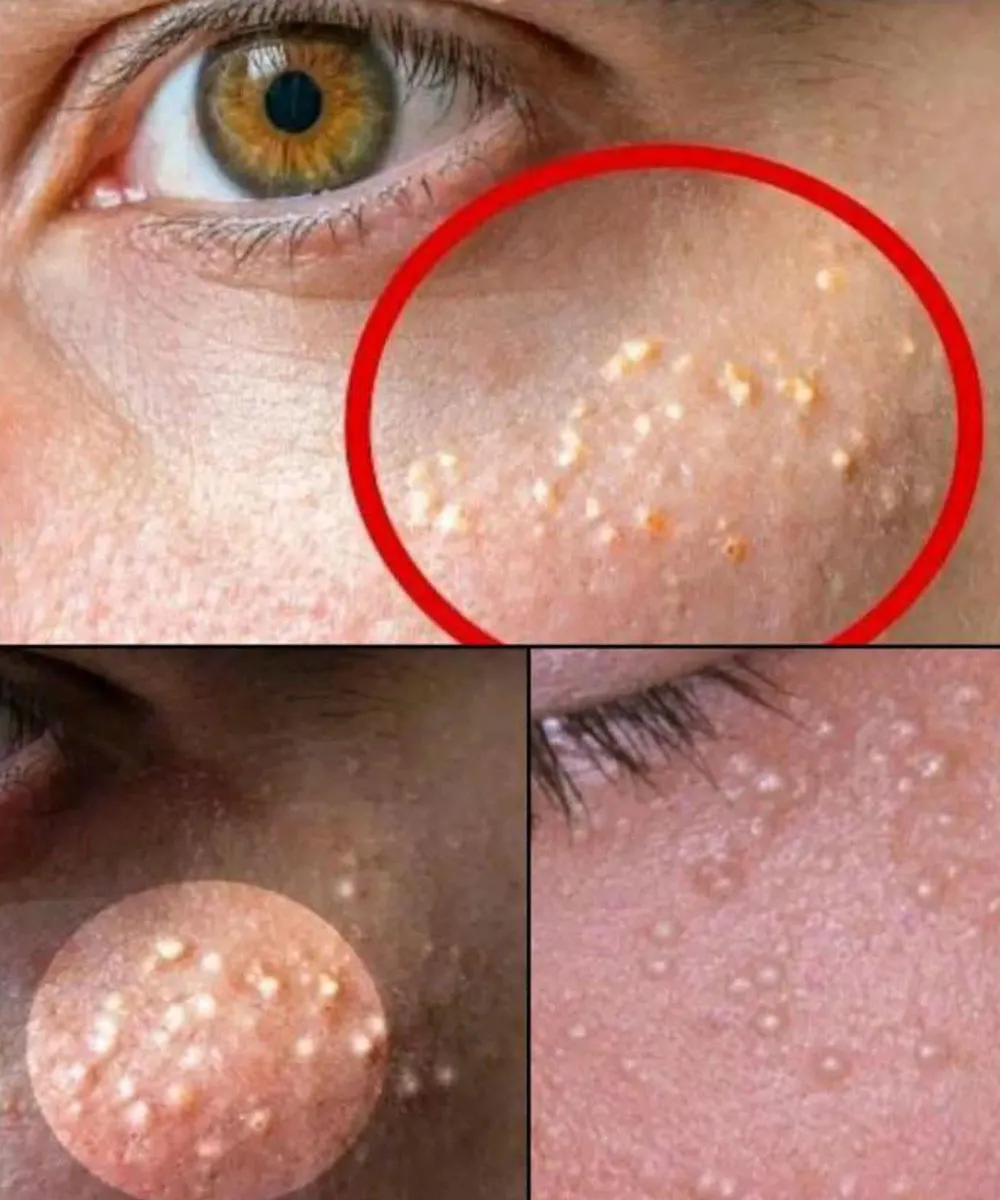
Sun damage thickens skin, slows healing, and makes milia more likely—especially on aging skin.
Apply a broad-spectrum sunscreen (SPF 30 or higher) every morning, even on cloudy days.
When to See a Dermatologist
If your milia are persistent, painful, spreading, or interfering with your confidence, a dermatologist can remove them safely in-office. Common treatments include:
- Needle extraction by a licensed provider
- Cryotherapy (freezing)
- Topical retinoids like adapalene or tretinoin
- Oral antibiotics for more severe forms like milia en plaque
Always consult a professional before trying advanced treatments, especially if you have delicate or aging skin.
Milia in Babies: A Gentle Note
Milia are common in infants, too—especially on the nose and cheeks.
However, baby skin should never be treated with adult products. Avoid lotions, oils, or scrubs. Simply wash their face gently with warm water and allow the bumps to resolve naturally, which they typically do in a few weeks.
Treat Your Skin with Patience and Respect
Milia may be small, but the frustration they bring—especially on the face—is very real. Still, these bumps are not your fault, and you don’t have to suffer in silence or resort to painful methods.
With the right care, your skin can stay healthy, smooth, and glowing, even in the presence of minor imperfections.
After all, true beauty—especially in later life—isn’t about flawlessness. It’s about comfort, confidence, and treating yourself with the same gentleness you offer others.
So take it slow. Care for your skin with love.
