You’ve held them a thousand times.
Slipped them into parking meters.
Stacked them on counters.
Flipped them for decisions.
But have you ever really looked at a quarter?
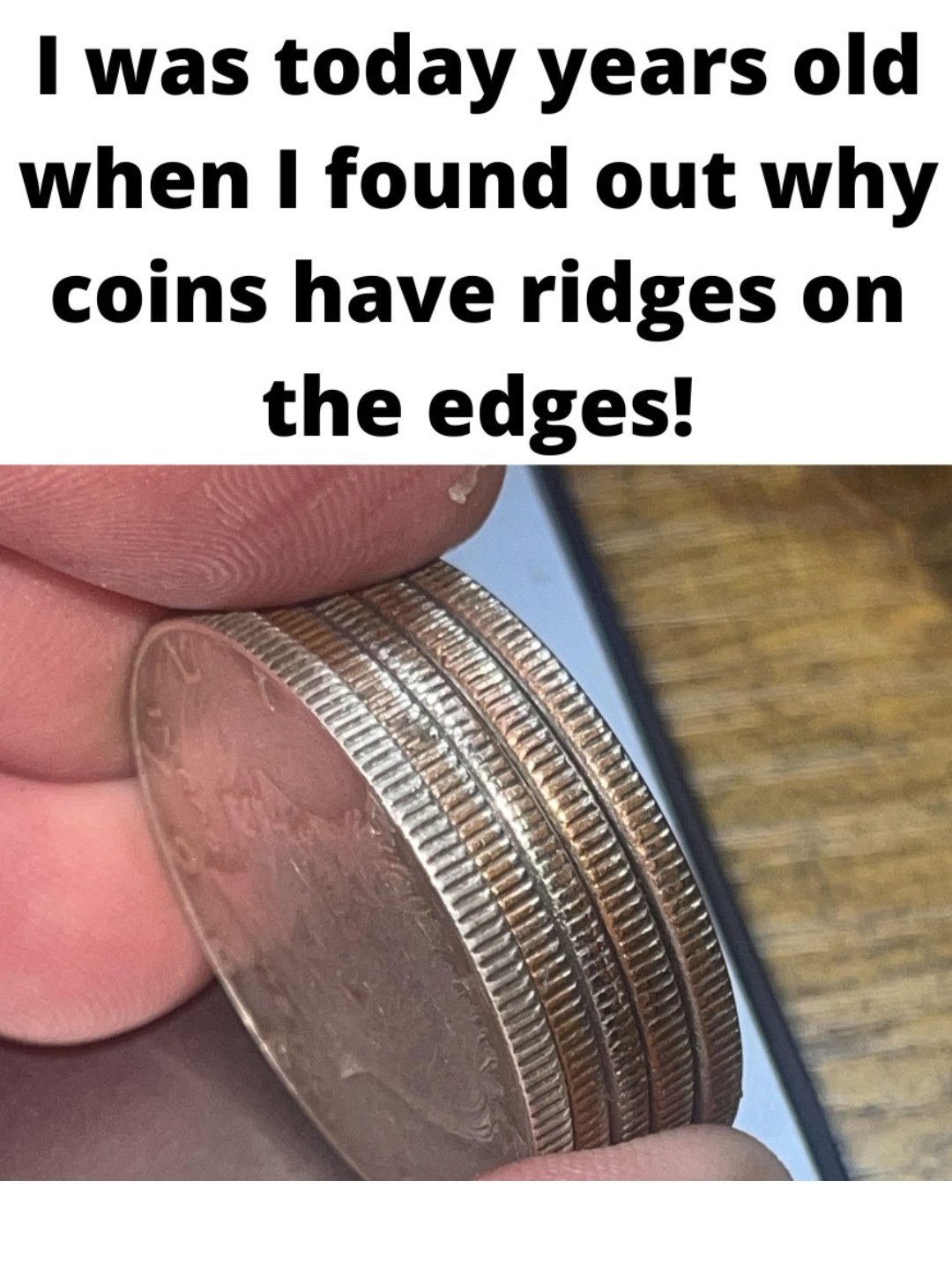
Run your thumb along its edge?
They’re a 300-year-old anti-theft system — born in an era of powdered wigs, silver hoards, and sneaky criminals who thought they could outsmart the king.
Let’s dive into the wild, true story behind coin ridges — and why they still matter today.
🔪 The Crime That Created Coin Ridges: “Coin Clipping”
Back in the 1600s and 1700s, coins weren’t just currency.
They were pure silver — or solid gold.
A quarter wasn’t worth 25 cents.
It was worth 25 cents’ worth of silver.
And that made them a target.
Enter the coin clipper — a clever (and illegal) thief who would:
Enter the coin clipper — a clever (and illegal) thief who would:
Shave tiny slivers of metal from the edges of coins
Spend the clipped coin as full value — because it still looked whole
Just a little off each coin.
Hard to notice.
But do it hundreds of times?
You’d have a fortune in stolen silver — and the government would be none the wiser.
It was rampant.
And it threatened the entire economy.
🛡️ The Solution: Reeded Edges — The Original Anti-Fraud Tech
Enter Sir Isaac Newton — yes, that Isaac Newton.
In 1696, the famed physicist became Warden of the Royal Mint in England.
And one of his first missions?
Stop the coin clippers.
His solution?
Add ridges — or “reeds” — to the edges of coins.
These grooves, known as reeding, made it impossible to clip silver without it being obvious.
Why?
A clipped coin would have broken or uneven ridges
A full coin had perfect, continuous grooves
No machine at the time could replicate the mint’s precise reeding pattern
It was 17th-century security tech — and it worked.
✅ Fun fact: Newton personally prosecuted over 100 counterfeiters — some of whom were sentenced to death.
🪙 Why Some Coins Still Have Ridges (And Others Don’t)
Fast forward to today.
Coins aren’t made of silver anymore (except for special editions).
So why do quarters, dimes, and half-dollars still have ridges?
Because the tradition stuck — and it still serves three important purposes:
1. Security Against Counterfeiting
Even today, reeding is part of a coin’s security profile.
Modern counterfeiters struggle to replicate the exact number and depth of ridges
Vending machines and banks use sensors to “read” the edge — helping detect fakes
✅ Did you know? U.S. dimes have 118 reeds, quarters have 119 — no coincidence.
2. Accessibility for the Visually Impaired
Ridges aren’t just for machines.
They’re for people.
For those who are blind or low-vision, texture matters.
A smooth-edged penny or nickel feels different from a ridged dime or quarter
This helps users identify coins by touch — a design feature that’s both practical and inclusive
✅ This wasn’t planned in the 1600s — but it’s a beautiful modern benefit.
3. Consistency & Familiarity
We’re used to it.
We expect it.
Coins with ridges just feel like money.
They sound different when they clink.
They roll differently.
And in a world of digital payments, that tactile experience still matters.
🟰 Why Pennies & Nickels Are Smooth
You’ve noticed it:
Pennies and nickels → smooth edges
Dimes and quarters → ridged
Why?
Because of history — and value.
Pennies (copper) and nickels (copper-nickel) never contained precious metals
No silver = no incentive to clip
So no need for reeding
Even though today’s quarters and dimes are also copper-nickel, the U.S. Mint keeps the ridges for:
Tradition
Security
Tactile distinction
✅ Fun fact: Half dollars still have ridges — but most people never see them.
🧠 Beyond Coins: The Legacy of Tamper-Proof Design
Coin ridges were just the beginning.
The same principle — make tampering obvious — is behind:
Watermarks on paper money
Holograms on credit cards
Security threads in bills
Microprinting and color-shifting ink
All designed to answer one question:
“Has someone messed with this?”
And just like reeded edges, these features are now standard — because once you see the trick, you can’t unsee it.
💡 Final Thoughts: Sometimes the Smallest Details Carry the Biggest Stories
We think history is in books, museums, and monuments.
But sometimes?
It’s in your pocket.
Those tiny ridges on a quarter?
They’re not just grooves.
They’re a testament to human ingenuity.
A battle between crime and justice.
A design solution that’s lasted centuries.
So the next time you hold a coin…
Don’t just spend it.
Look at it.
Feel it.
Respect it.
Because in that little piece of metal is a story of:
Theft
Genius
Science
And one very smart physicist named Newton
And once you know the truth?
You’ll never flip a coin the same way again.
