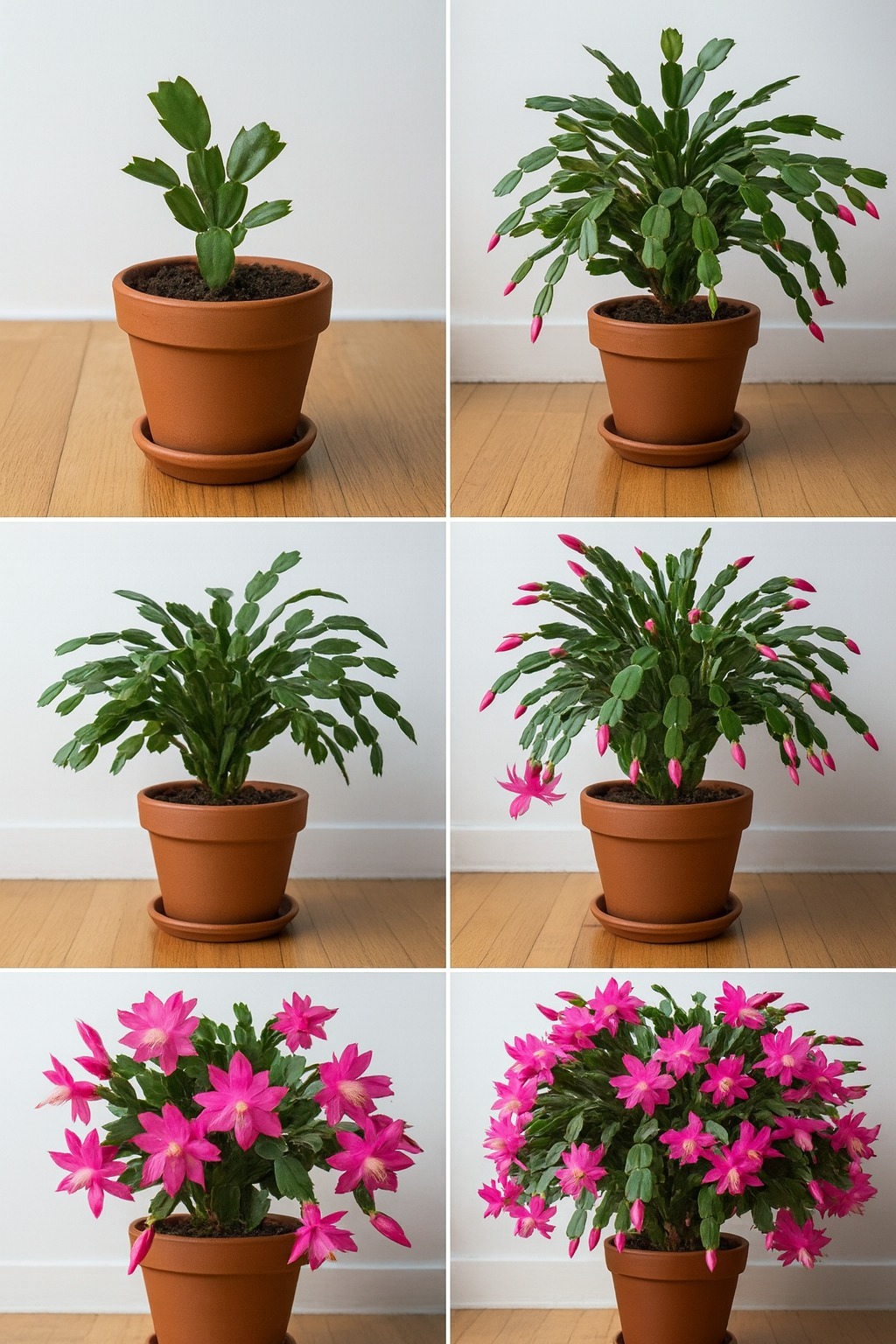
Within a few weeks, roots will begin to develop. At this stage, you can transplant your new cactus into a slightly larger pot filled with a mix of regular potting soil, compost, and coarse sand. This combination provides the aeration and nutrients the plant needs to grow strong and healthy.
The Secret to a Blooming Christmas Cactus
Although this plant is fairly undemanding, a few simple care habits can make all the difference between a leafy cactus and one covered in blossoms.
Watering, however, requires a bit of balance. During spring and summer, the plant needs frequent watering to keep the soil slightly moist. The soil should never dry out completely, yet it should not remain soggy either, as this may lead to root rot. Water deeply when the top layer of soil feels dry to the touch, and always let excess water drain away. In autumn and winter, reduce watering slightly, especially once flowering begins.
Temperature also plays a key role in keeping your Christmas cactus happy. The plant thrives in moderate indoor temperatures — ideally between 15°C and 21°C (59°F to 70°F). Avoid sudden temperature changes and never place the cactus near heating vents, stoves, or drafty windows. To boost humidity, which this plant appreciates, place a shallow tray of pebbles and water beneath the pot. As the water evaporates, it will create a humid microclimate around the plant.
Encouraging Continuous Blooming
A Christmas cactus typically flowers in late autumn or early winter, but with proper care, it can bloom several times a year. To trigger new flowering cycles, the plant needs a brief rest period after blooming. This dormant phase allows it to regain energy for the next display of flowers.
Once flowering ends, reduce watering and light exposure for about six weeks. During this time, the plant should experience 12 to 14 hours of uninterrupted darkness each night, with temperatures between 10°C and 12°C (50°F to 54°F). This “rest” mimics its natural environment in the Brazilian highlands, where shorter days and cooler nights signal the start of the next blooming season.
Continue reading…
