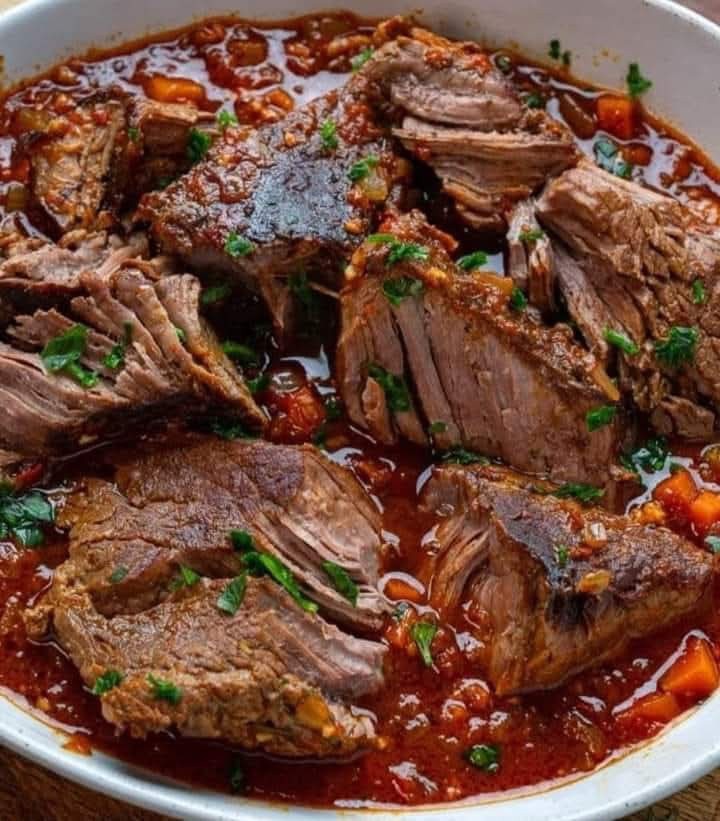
1. Brown the Beef & Pancetta
-
Pat the beef chunks completely dry with paper towels. This is crucial for a good sear. Generously season all over with salt and pepper.
-
In a large Dutch oven or heavy-bottomed pot, cook the diced pancetta over medium heat until crispy and its fat has rendered. Use a slotted spoon to remove the pancetta and set it aside, leaving the fat in the pot.
-
Increase the heat to medium-high. Add the olive oil to the pancetta fat. Carefully place the beef chunks in the pot, ensuring not to crowd them (work in batches if necessary). Sear for 3-4 minutes per side, until a deep brown crust forms. Remove the beef and set aside.
2. Sauté the Aromatics
-
Reduce the heat to medium. Add the diced onion, carrot, and celery (this is your soffritto). Sauté for 6-8 minutes, until the vegetables have softened and the onions are translucent.
-
Add the minced garlic and cook for one more minute until fragrant.
3. Deglaze and Build the Sauce
-
Pour in the red wine, scraping the bottom of the pot with a wooden spoon to release all the flavorful browned bits. Let the wine simmer for 3-4 minutes until it has reduced by about half.
4. The Long, Slow Braise
-
Bring the liquid to a gentle simmer. Then, cover the pot with a tight-fitting lid and reduce the heat to the lowest possible setting.
-
Let the roast braise gently for 3 to 4 hours. The exact time will depend on the size of your beef pieces. It’s done when the meat is extremely tender and easily pulls apart with a fork.
5. Finish and Serve
-
Carefully remove the beef to a cutting board. Discard the herb stems and bay leaves.
-
For a smoother sauce, you can use an immersion blender to partially puree the vegetable-rich braising liquid right in the pot. Alternatively, you can leave it chunky. Let the sauce simmer uncovered for 10-15 minutes to thicken slightly if desired.
-
Shred the beef with two forks or slice it against the grain. Return the meat to the sauce and stir to combine.
-
Serve the Stracotto and its glorious sauce over a bed of creamy polenta, mashed potatoes, or with thick slices of crusty bread to soak up every last drop.
📝 Notes for Success
-
The Sear is Key: Don’t rush the browning step. A deep, dark crust on the beef builds the foundational flavor for the entire dish.
-
Low and Slow is the Way: A gentle, low-heat simmer is essential. Boiling will make the meat tough. The meat is done when it’s fork-tender, not at a specific internal temperature.
-
Make it Ahead: Stracotto tastes even better the next day! Let it cool completely and store it in the refrigerator overnight. The flavors will meld and intensify. Reheat gently on the stovetop.
-
Wine Note: Use a wine you would enjoy drinking. The flavor concentrates, so a good-quality wine makes a difference.
Thank you for your request! I hope you enjoy this delicious taste of Italy.
