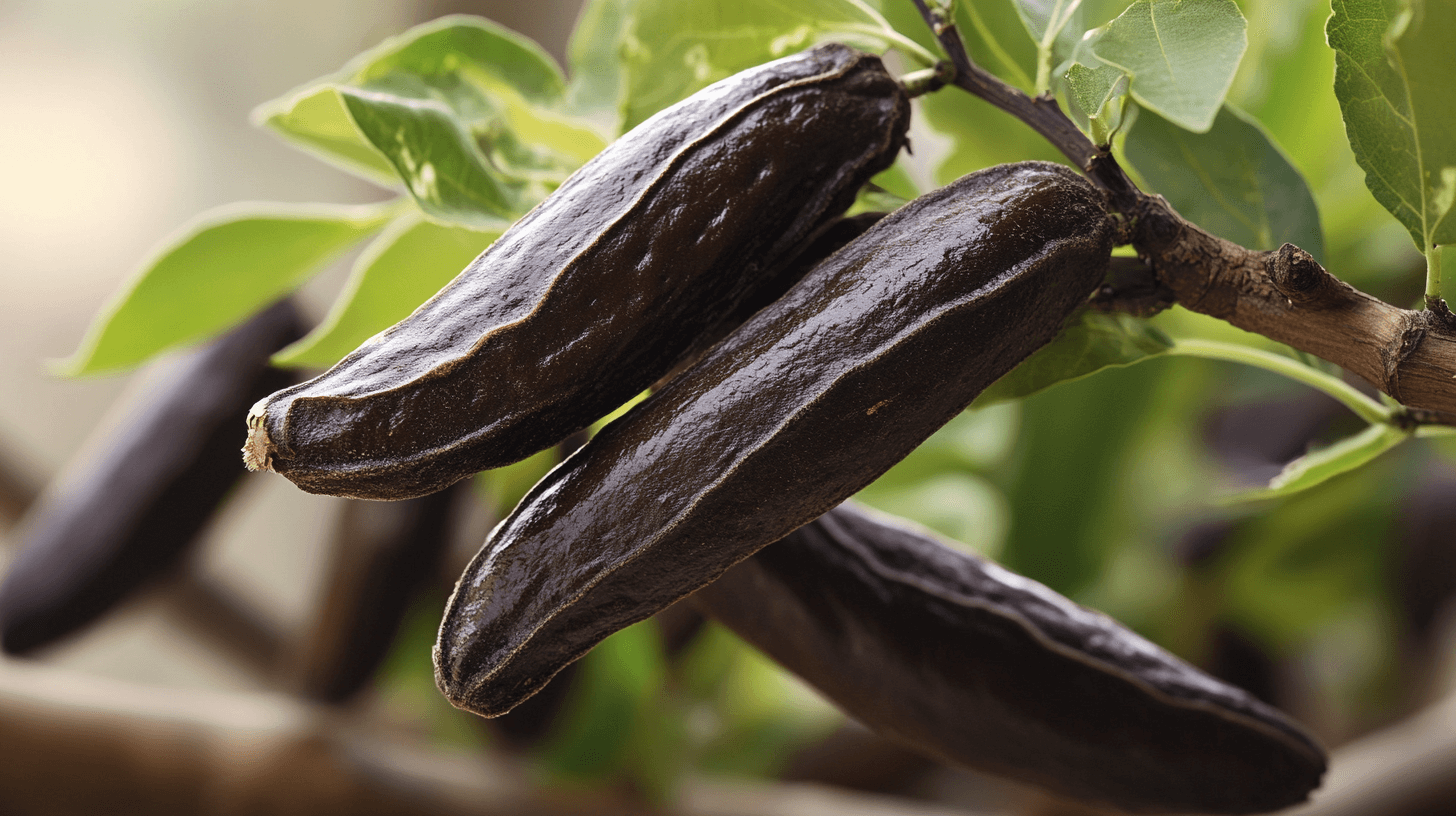
- Carob Powder for Baking
- Replace cocoa powder in recipes with carob powder at a 1:1 ratio. Adjust liquids slightly if the batter seems dry.
- Carob Syrup
- Boil 5-6 carob pods in 4 cups of water for 30 minutes. Strain, simmer the liquid until thickened, and use as a topping for pancakes or yogurt.
- Carob Tea
- Boil 1-2 dried carob pods or 2 tablespoons of carob powder in 3 cups of water for 10 minutes. Strain and serve warm.
- Carob Milk
- Heat 2 cups of milk (or plant-based milk) with 1 tablespoon of carob powder and a sweetener of choice. Stir well and enjoy.
- Carob Energy Balls
- 🍫 Carob Energy Bars (No-Bake)
- Ingredients (makes 8–10 bars):
- 200 g rolled oats, coarsely ground
- 100 g carob powder
- 100 g nuts (almonds, cashews, or a mix)
- 150 g pitted dates (or raisins)
- 3 tbsp coconut oil (melted)
- 2 tbsp honey or maple syrup
- 1 tsp cinnamon (optional)
- a pinch of salt
- Instructions:
- Prepare the base: place the dates in a blender/food processor and blend into a paste.
- Add dry ingredients: oats, carob powder, ground nuts, cinnamon, and salt.
- Mix: add coconut oil and honey → blend until you get a sticky mixture.
- Form the bars: press the mixture into a small tray lined with parchment paper (about 2 cm thick).
- Chill: refrigerate for 2–3 hours, then cut into bars.
- Carob Spread
- Mix 2 tablespoons of carob powder, 1 tablespoon of coconut oil, 2 tablespoons of honey, and 2 tablespoons of milk powder. Store in a jar as a bread spread.
- Carob Ice Cream
- Blend 3 frozen bananas with 1 cup of milk, 2 tablespoons of carob powder, and a drizzle of honey. Freeze for 1-2 hours before serving.
- Carob Chips
- Combine 1/2 cup of melted coconut oil, 1/2 cup of carob powder, and honey to taste. Pour onto parchment paper, freeze for 1 hour, and break into chips.

⚠️ Precautions for Carob
- Carob is naturally sweet, so people with diabetes or blood sugar issues should consume in moderation.
- Some individuals may experience allergic reactions (rare, but possible, especially if sensitive to legumes).
- Carob contains tannins, which in excess may cause mild digestive discomfort (gas, bloating).
- While caffeine-free, large amounts of carob can still affect digestion due to its high fiber content.
- Introduce gradually in children’s diets to ensure there are no sensitivities.
Disclaimer: While carob is generally safe, always consult a healthcare professional before incorporating large amounts into your diet, especially if you have specific health concerns.
