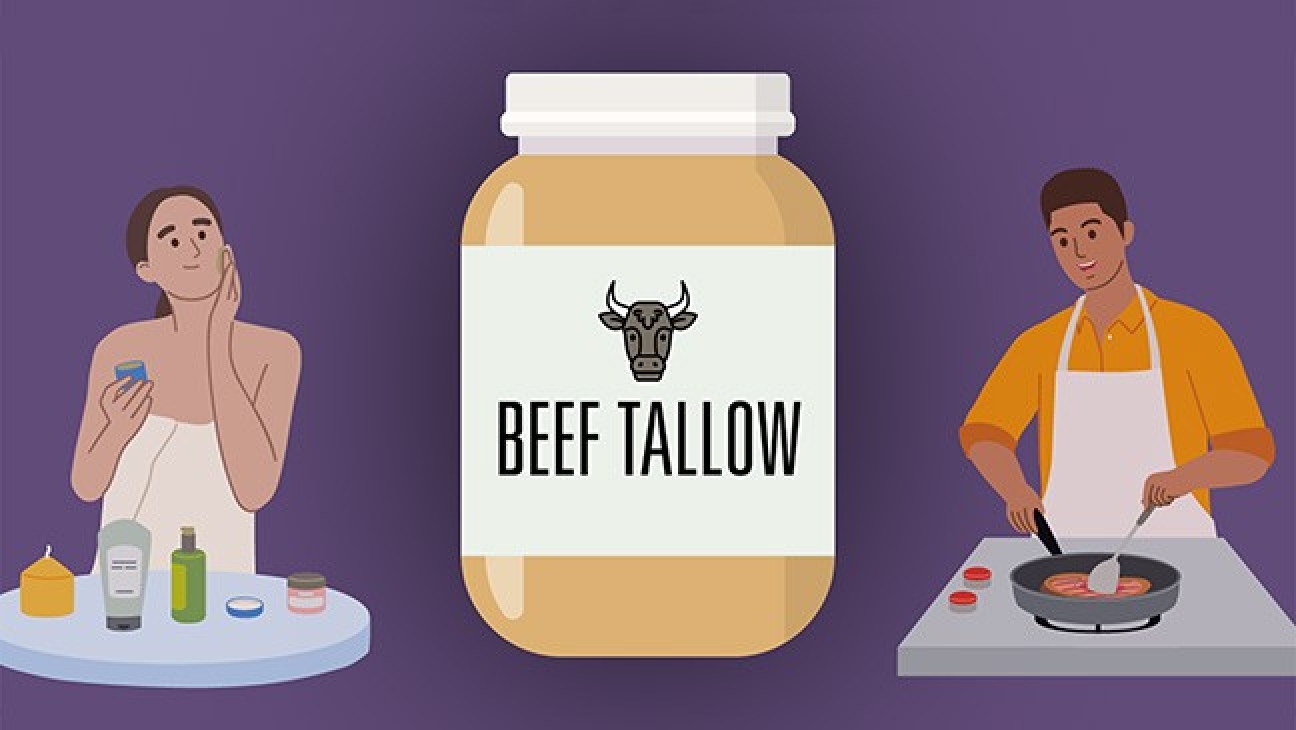
Tallow is a high source of stearic acid, a saturated fat that research suggests may have a neutral or even beneficial effect on cholesterol levels compared to other saturated fats. Stearic acid is also highly satiating, meaning it can help you feel full longer, which supports appetite regulation.
Should You Use It? The Critical Look at Saturated Fat
| Concern | Details |
| Saturated Fat Intake | Medical organizations like the American Heart Association (AHA) recommend limiting saturated fat to no more than 5-6% of total daily calories, as high intake is linked to increased LDL (“bad”) cholesterol and a higher risk of cardiovascular disease. |
| The Contradiction | While the saturated fat in tallow is high, much of it comes from stearic acid, which is believed to have a more neutral effect on cholesterol compared to other saturated fats like palmitic acid. |
| The Expert Consensus | Many dietitians suggest that while tallow contains beneficial nutrients (CLA, Vitamins), these benefits do not outweigh the risks associated with excessive saturated fat consumption. It is best used sparingly and in moderation as part of an otherwise heart-healthy diet that prioritizes unsaturated fats (like olive or avocado oil) as the primary cooking oils. |
Beyond the Kitchen: Tallow in Skincare
The recent viral trend involves using beef tallow as an “all-natural” moisturizer. This is due to the fact that tallow’s fatty acid profile closely resembles the human skin’s natural oil (sebum).
-
Moisturizing: It acts as an occlusive agent, locking in moisture and preventing water loss, making it effective for extremely dry skin, eczema, or psoriasis.
-
The Risk: Dermatologists caution that tallow is comedogenic, meaning it can easily clog pores and potentially worsen acne, especially for those with oily or combination skin.
